
News at the Historical Society
Ticking with Excitement
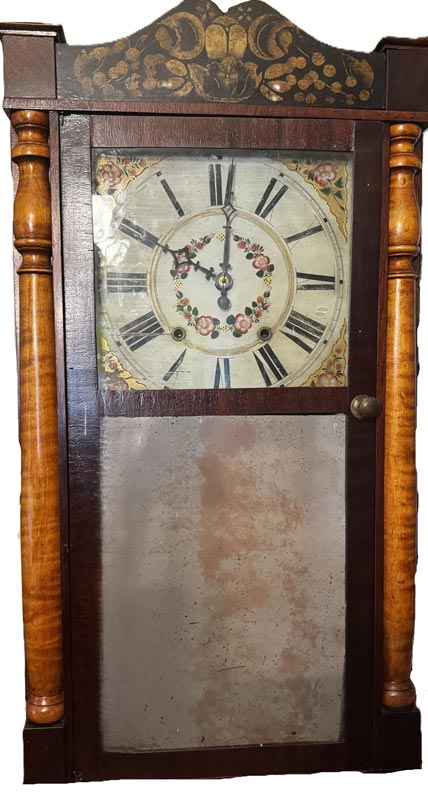
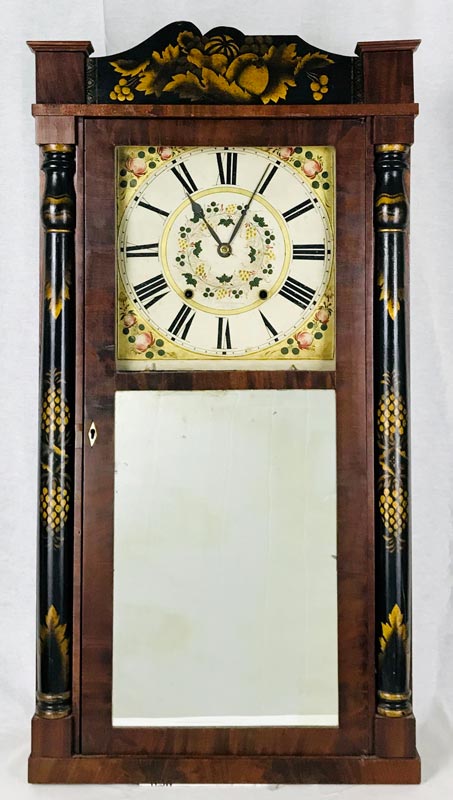
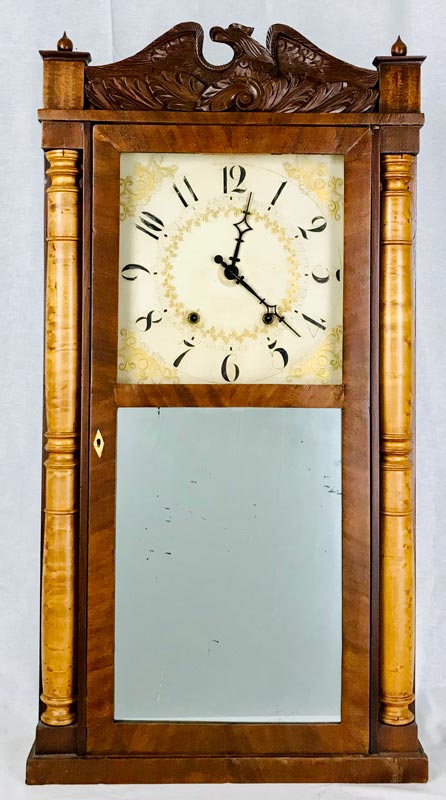
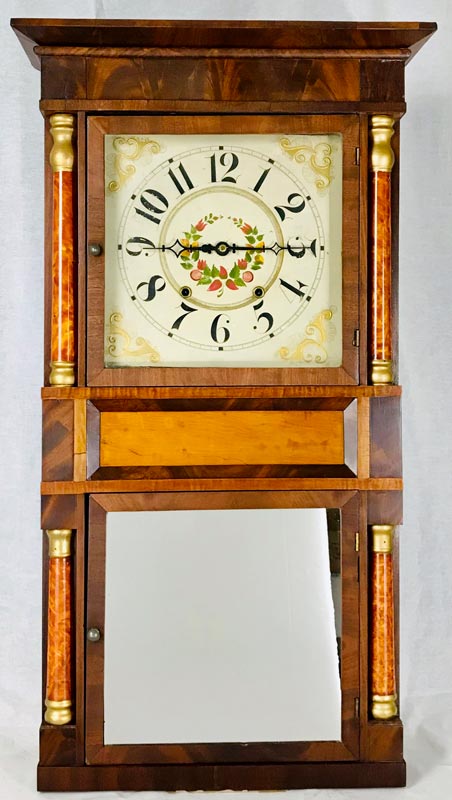
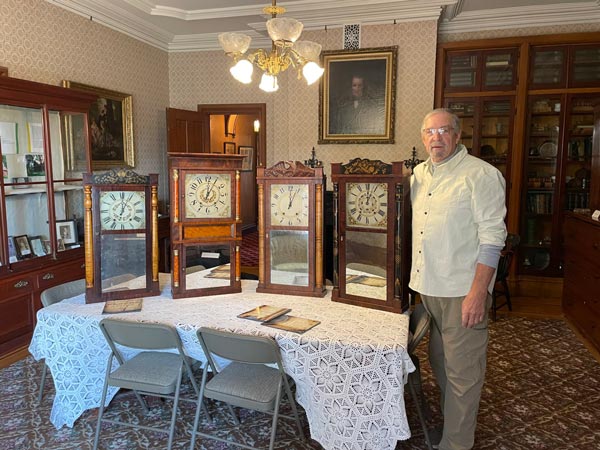
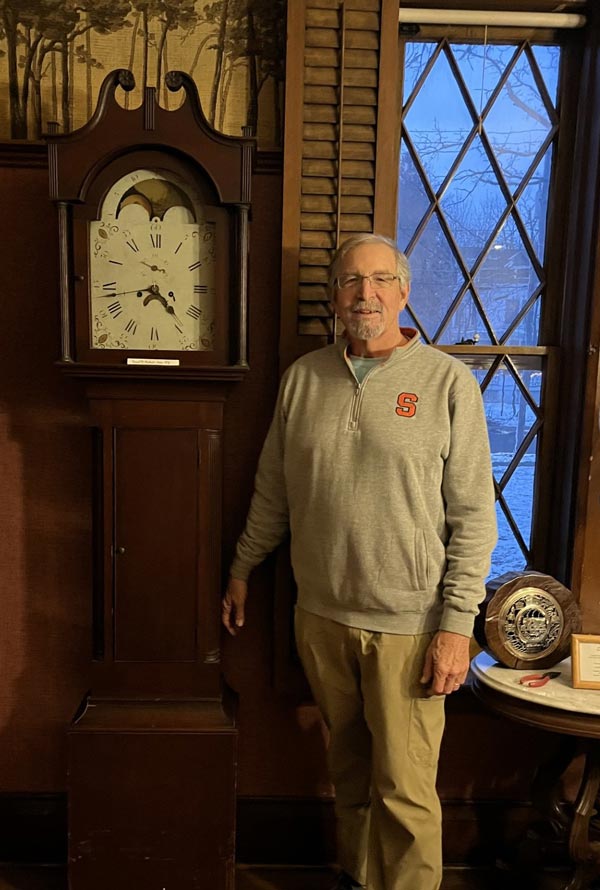
Russ Oechsle is a long-time researcher and collector of Upstate New York clocks and clock makers. His first articles on Madison County clocks appeared in the early 1980s in the Madison County Heritage. Oechsle was the co-author of the 2003 National Association of Watch & Clock Collectors book “An Empire in Time – Clocks and Clock Makers of Upstate New York,” and has written articles for numerous presentations to local and national interest groups and historical societies. He was once a Board Member of the Madison County Historical Society and previously donated to the Historical Society in the past. The Samuel W. Chubbock tall clock that stands in the Dining Room of Cottage Lawn was another donation by Russ only a few years ago. He had also provided the Historical Society with 21 rare early American shelf clocks for a temporary exhibit back in 2021 held throughout the rooms at the Cottage Lawn.
The Madison County Historical Society is absolutely thrilled to accept these generous donations from Russ Oechsle. All 4 of these new donations will be catalogued, accessioned, and put on display for visitors to admire alongside his previous Chubbock tall clock. The clocks will be displayed throughout the first floor of the Higgenbotham House with informational display cards about the Clocks and their makers and an image of the inside.
Want to learn more about these beautifully crafted clocks? Book a tour and come check them out yourself!
Edmonia Lewis Exhibit
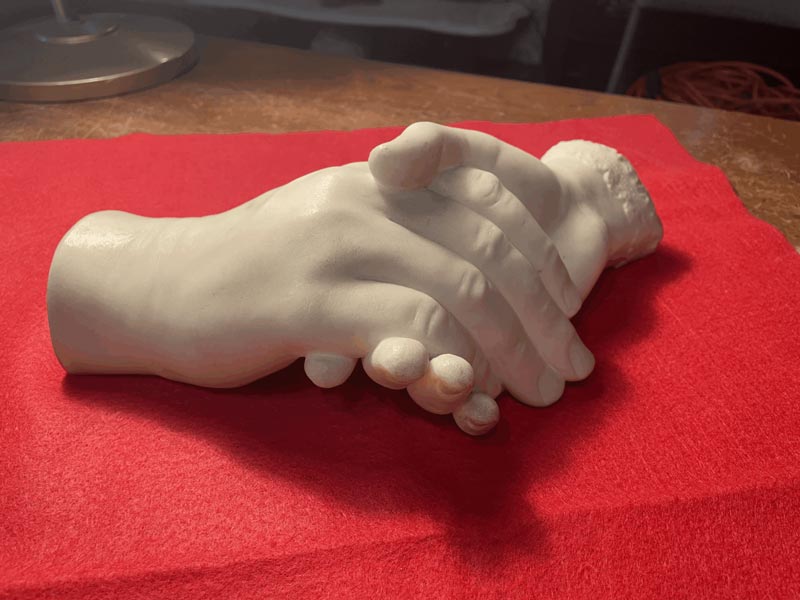
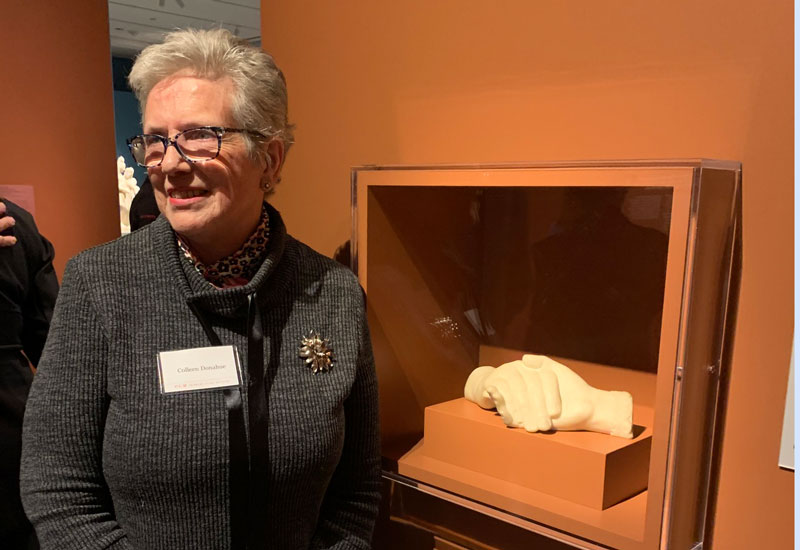
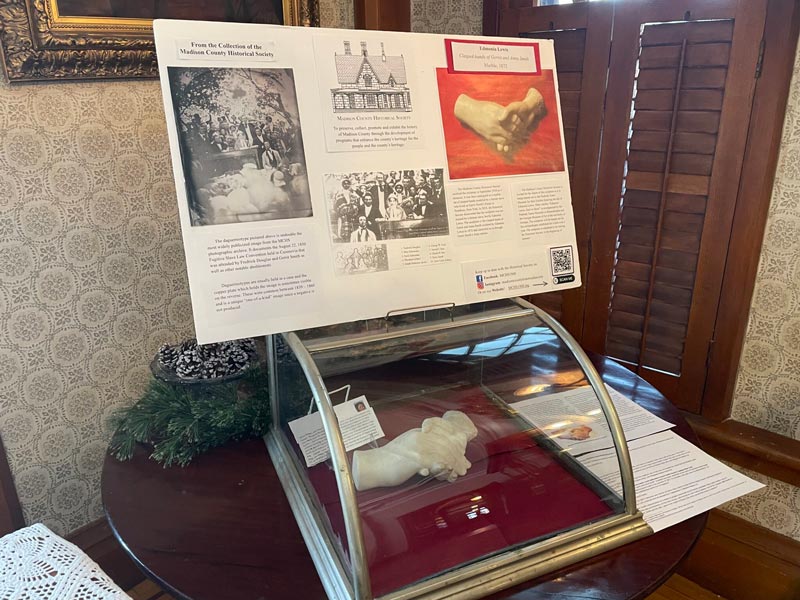
The Madison County Historical Society is excited to announce that an item from our collection is now on what will be an 18 month journey as part of an historic multi-museum exhibition. A marble sculpture of the clasped hands of Gerrit Smith and his wife Ann, is featured in the first major retrospective exhibition of the work of acclaimed 19th-century black and indigenous sculptress Edmonia Lewis. It is among thirty sculptures by Lewis from public and private collections across the United States and abroad that have been brought together with a number of additional objects in a range of media, in an exhibition entitled “Edmonia Lewis: Said in Stone” that made its debut at the Peabody Essex Museum (PEM) in Salem, MA on February 14, 2026 running through June 7, 2026. MCHS Board President Colleen Donahue was in attendance at the opening night in Salem. The exhibition will next move to the Georgia Museum of Art from August 8, 2026 to January 3, 2027, and the North Carolina Museum of Art from April 3 to July 11, 2027.
Born in Greenbush, New York, in 1844, Lewis became the first sculptor of Afro-Caribbean and Anishinaabe descent to achieve widespread international acclaim. Her mother was a member of the Mississaugas of the Credit First Nation, an Anishinaabe nation in present-day Ontario, and was known for her creativity in weaving and embroidery; her father was a free black man who may have worked as a gentleman’s servant. Orphaned as a child, Lewis was raised by maternal aunts who profoundly inspired her as an artist, teaching her how to work with birch bark and porcupine quills, craft textiles and moccasins and use a range of materials to tell stories.
At age 19, Lewis met the abolitionist Frederick Douglass at Oberlin College in Ohio. He recognized her artistic talent and encouraged her to “seek the East”. She began her artistic career in Boston, which was a hotbed of antislavery activism when she arrived in 1863. Lewis saw residents across the city actively organizing and gathering to discuss race relations in the United States and the unfolding Civil War. Here, Lewis thought, was a place to stake her claim as a black artist with a powerful point of view. The young artist quickly set up a downtown studio and connected with the city’s most prominent artists and patrons, forming networks of support with social reformers and abolitionists. Her initial artistic successes came from creating small portrait medallions of famous American abolitionists, artworks that were popular during the Civil War.
Gerrit Smith, portions of whose National Historic Landmark estate can still be visited in Peterboro, wrote in his journal “August 23, 1872, Edmonia Lewis (artist) of Rome, Italy, comes to take the first steps toward putting my statue in marble. I am surprised and not pleased by it. September 3, Edmonia leaves us.” Smith’s disinclination to a statue (a project conceived by his friends) prevailed. Edmonia made a plaster cast of the clasped right hands of Gerrit and Ann Smith, and later in her studio in Rome, she carved the hands in marble. This sculpture has long been in the collection of the MCHS and is now a part of this groundbreaking exhibition.
“Edmonia Lewis transcended national, racial and gender barriers,” said Jeffrey Richmond-Moll, PEM’s George Putnam Curator of American Art and exhibition co-curator. “Her body of work asserts a unique voice in the history of American art. This retrospective exhibition places Edmonia Lewis and her sculptures within the context of pressing social concerns of her time and ours. Together with Native and Black scholars, artists and community members, we also explore how Lewis reconciled her art and her identity in the face of prejudicial laws, shifting public sentiment and competing conceptions of what it meant to be Black and Indigenous in the 19th century.”
Founded in 1799, the Peabody Essex Museum (PEM) in Salem, Massachusetts, is the country’s oldest continuously operating museum. PEM provides thought-provoking experiences of the arts, humanities and sciences to celebrate the creative achievements and potential of people across time, place and culture. PEM offers a varied and unique visitor experience, with hands-on creativity zones, interactive opportunities and performance spaces. The museum’s campus, which offers numerous gardens and green spaces, is an accredited arboretum and features more than a dozen noted historic structures, including Yin Yu Tang, a 200-year-old Chinese home that is the only example of Chinese domestic architecture in the United States.
The Madison County Historical Society’s mission is to preserve, collect, promote and exhibit the history of Madison County and its fifteen towns and one city through the development of programs and events that enhance the county’s heritage for the people of Madison County and those studying the county’s heritage. The society’s headquarters, Cottage Lawn, located in Oneida, is an 1849 Gothic Revival Villa designed by prominent architect Alexander Jackson Davis. Cottage Lawn is preserved and operated as a historic museum.
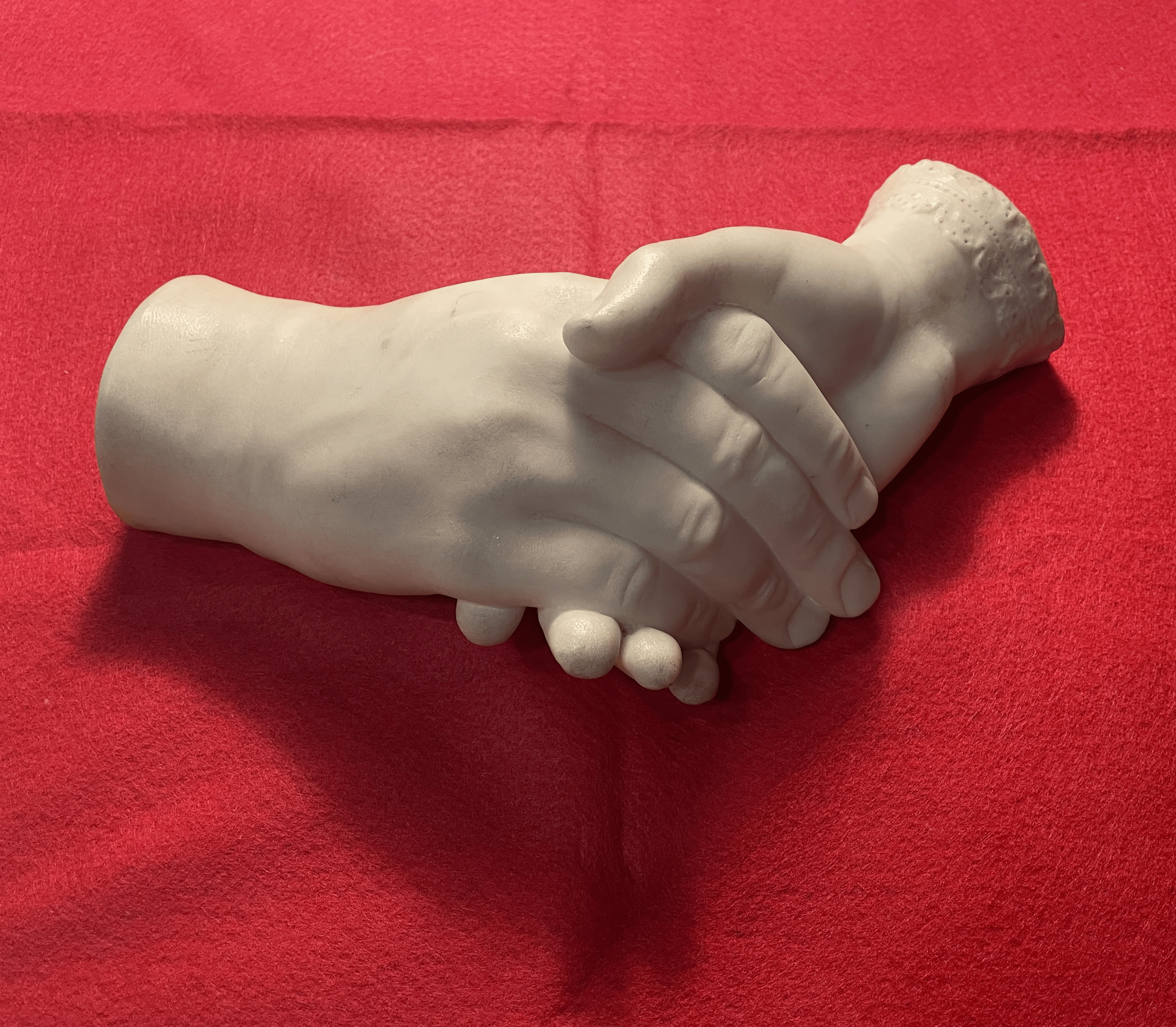
The Madison County Historical Society has many historically significant items in its collection and on display. One of which happens to be a small marble sculpture that had once been overlooked. It was not until research was conducted that the Historical Society discovered the importance and significance of the sculpture and its artist.
The Madison County Historical Society received the sculpture in September of 1938 as a donation. It was catalogued then as a set of clasped hands sculpted in marble by a former slave who had lived on Gerrit Smith’s estate in Peterboro, New York. In 2018, the Historical Society found that the sculpture was not created by a former slave, but by Edmonia Lewis. She was a famous American artist who did not receive recognition and was largely overlooked at the time. In 1872, Edmonia Lewis sculpted the hands of Gerrit Smith and his wife Anna Smith. The marble sculpture in the Historical Society’s possession was identified through Gerrit Smith’s diary entries. Edmonia Smith was a well-educated young black woman of Indigenous descent who broke many boundaries in her time. She had traveled to Rome, Italy in 1866 to further her studies in art and continued to revisit the city frequently throughout her life. Much of her art had been inspired by the lives of Civil War heroes and abolitionists such as the clasped hands for Gerrit Smith.
We are extremely excited for the future of this sculpture as it will be loaned out to the Peabody Essex Museum for their exhibit that will feature the life of Edmonia Lewis. The exhibit, “Edmonia Lewis: Said in Stone” is co-organized by the Peabody Essex Museum in Massachusetts and the Georgia Museum of Art at the University of Georgia. The Exhibit will include art and objects of Edmonia Lewis’s life and work to tell the story of this amazing late 1800s American artist. The Historical Society will be loaning out the “Clasped Hands of Gerrit and Anna Smith” for a full year long journey in this extraordinary exhibition. It is scheduled to leave in the beginning of January and will return in late 2027.
We are extremely excited for the future of this sculpture as it will be loaned out to the Peabody Essex Museum for their exhibit that will feature the life of Edmonia Lewis. The exhibit, “Edmonia Lewis: Said in Stone” is co-organized by the Peabody Essex Museum in Massachusetts and the Georgia Museum of Art at the University of Georgia. The Exhibit will include art and objects of Edmonia Lewis’s life and work to tell the story of this amazing late 1800s American artist. The Historical Society will be loaning out the “Clasped Hands of Gerrit and Anna Smith” for a full year long journey in this extraordinary exhibition. It is scheduled to leave in the beginning of January and will return in late 2027.